

Table of Contents
- Why Skin Starts Aging in Your 30s (And What You Can Control)
- The #1 Cause of Early Skin Aging: Sun Exposure and UV Damage
- The Impact of Oxidative Stress on Skin and How to Counter It
- Benefits of Collagen for Skin Elasticity and Firmness
- Your Daily Skincare Routine for Anti-Aging: Morning and Night
- Lifestyle Habits That Accelerate or Prevent Early Skin Aging
- Common Mistakes That Undo Your Anti-Aging Efforts
- How Long Until You See Results?
- Conclusion: Building a Preventative Skincare Plan That Sticks
- Frequently Asked Questions
Last Updated: September 16, 2026
Why Skin Starts Aging in Your 30s (And What You Can Control)
Most people notice the first fine lines and a slight loss of firmness sometime in their 30s, and the changes usually appear gradually rather than overnight. This guide from MediLuxe Skincare explains how to prevent early skin aging by separating the factors you can influence from those you cannot, then building habits around the ones that actually respond to effort.
Intrinsic aging is the genetically programmed, time-driven decline in skin function. Extrinsic aging is the damage accumulated from sun, pollution, and lifestyle. Intrinsic aging is largely out of your hands. Extrinsic aging is where prevention pays off, and it is the focus of everything below.
Intrinsic vs. Extrinsic Aging: What's Actually Preventable
Intrinsic aging follows genetics and time: collagen production slows, elastin fibers lose resilience, and cellular turnover decelerates. You cannot stop this clock, but you can slow how visibly it shows.
Extrinsic aging comes from outside the body. Ultraviolet radiation, pollution, smoking, poor sleep, and repeated facial expressions all leave marks that accumulate faster than intrinsic aging alone. Dermatologists generally agree that the majority of visible aging is extrinsic, which is good news: it means most of what you see is influenced by daily choices.
The #1 Cause of Early Skin Aging: Sun Exposure and UV Damage
Sun exposure is the single largest driver of early skin aging. Ultraviolet radiation breaks down collagen and elastin in the dermis, triggers free radical damage, and causes photo-aging that shows up as fine lines, wrinkles, hyperpigmentation, and age spots.
Melanin offers some natural protection, but it does not make anyone immune.
Broad-Spectrum Sunscreen: SPF, PA Ratings, and Reapplication
Choose a broad-spectrum sunscreen that covers both UVA and UVB. SPF measures UVB protection; PA ratings (PA+, PA++, PA+++, PA++++) indicate UVA protection. Look for SPF 30 or higher and a PA+++ or PA++++ rating for daily use.
Protective Clothing, Hats, and Sunglasses
Clothing is the most reliable sun protection because it does not wear off. A wide-brimmed hat shields the face, ears, and neck. Sunglasses protect the delicate skin around the eyes, where fine lines appear early and sunscreen application is often patchy.
The Impact of Oxidative Stress on Skin and How to Counter It
Oxidative stress on skin occurs when free radical damage outpaces the body's ability to neutralize it. Free radicals are unstable molecules that attack collagen, elastin, and cell membranes, accelerating fine lines and dullness.
Antioxidants, Pollution, and Blue Light
A daily antioxidant serum in the morning pairs well with sunscreen. Vitamin C is one of the most studied topical antioxidants, and it also supports a more even-looking complexion by interfering with excess melanin production.
Benefits of Collagen for Skin Elasticity and Firmness
Collagen is the structural protein that gives skin its firmness, and elastin fibers provide the bounce-back. Collagen production declines with age, and sun damage accelerates that decline, which is why skin elasticity and firmness change over time. Understanding which ingredients actually influence that process, and which are marketing, is where most guides stay vague.
Topical Retinoids vs. Collagen Supplements: What the Evidence Shows
Topical retinoids are among the best-studied ingredients for improving skin texture and softening fine lines. They work by speeding cellular turnover and supporting collagen production in the dermis. Most practitioners find that prescription-strength tretinoin and over-the-counter retinol differ mainly in potency and irritation risk, so beginners typically start with a lower-strength retinol two to three nights per week and build tolerance before increasing frequency.
A Practical Ingredient Stack, Not a Product Pile
A workable evidence-based approach looks like this:
- Morning: vitamin C serum, then broad-spectrum sunscreen.
- Night: a retinoid on the nights your skin tolerates it, with moisturizer to buffer irritation.
- Daily: an internal collagen, glutathione, and vitamin C routine to support the system from within.
Your Daily Skincare Routine for Anti-Aging: Morning and Night
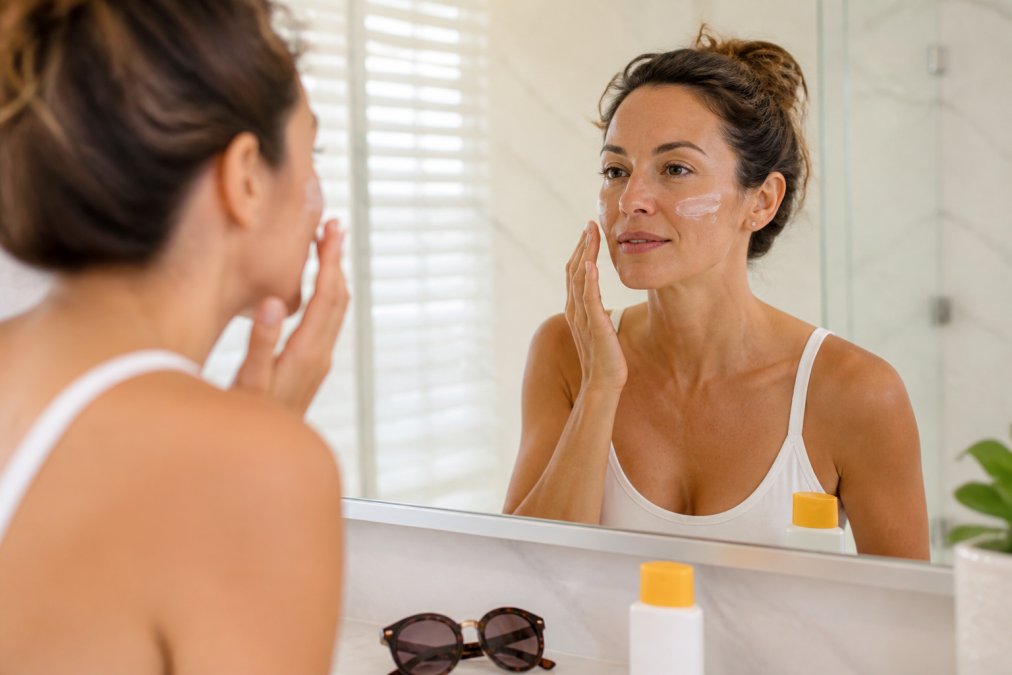
A daily skincare routine for anti-aging does not need to be complicated. It needs to be consistent, gentle, and built around protection and repair.
Morning:
- Cleanse with a gentle, fragrance-free cleanser
- Apply an antioxidant serum such as vitamin C
- Moisturize to support the skin barrier
- Finish with broad-spectrum sunscreen, SPF 30 or higher
Night:
- Cleanse to remove sunscreen, oil, and pollution
- Apply a topical retinoid if your skin tolerates it
- Moisturize generously to support overnight repair
Moisturizing, Skin Barrier Support, and Fragrance-Free Formulas
A healthy skin barrier holds in hydration and keeps irritants out. When the barrier is compromised, skin looks dull and fine lines appear more pronounced, because dehydrated skin loses plumpness.
Lifestyle Habits That Accelerate or Prevent Early Skin Aging
Daily habits shape skin as much as any product. The choices below either accelerate or slow the visible signs of aging, and most are within your control. What most guides skip is the mechanism behind each one, and the mental side of watching your skin change.
Sleep Hygiene and the Circadian Repair Window
Skin repair follows a circadian rhythm. Cell turnover and collagen repair peak overnight, which is why a consistent sleep schedule does more for your skin than an occasional long night. Poor sleep hygiene, irregular bedtimes, bright screens late, and short total sleep, compresses that repair window and shows up as dullness, puffiness, and more pronounced fine lines.
Diet, Smoking, and Facial Expressions
Diet supports skin from within. Nutrients that support collagen and antioxidant defenses, including vitamin C and colorful produce, help counter oxidative stress. Smoking constricts blood vessels and reduces nutrient absorption and circulatory health, which starves skin of oxygen and accelerates wrinkles. Repeated facial expressions etch lines over time, and while you cannot stop expressing yourself, daily sunscreen and moisturizer reduce how deeply those lines set.
The Psychological Side of Skin Changes
Most guides are purely clinical, but the mental impact of early skin changes is real. Noticing the first fine lines can trigger anxiety, comparison, and a sense of losing control, and that stress itself can affect skin through elevated cortisol and disrupted sleep, creating a feedback loop.
Common Mistakes That Undo Your Anti-Aging Efforts
The most common mistake is treating sunscreen as a beach-only product. Daily incidental exposure, through car windows and short walks, adds up over years.
How Long Until You See Results?
Most people notice improved hydration and brightness within a few weeks of a consistent routine. Changes in firmness and fine lines typically take longer, often several months, because collagen remodeling is a slow process.
Conclusion: Building a Preventative Skincare Plan That Sticks
The hardest part of how to prevent early skin aging is not knowing what to do; it is doing it consistently for years. The plan that works is the one simple enough to follow on your busiest days.
Frequently Asked Questions
What is the #1 cause of early skin aging?
Ultraviolet radiation from the sun is the leading cause of early skin aging, a process called photo-aging. UV exposure breaks down collagen and elastin fibers in the dermis, leading to fine lines, wrinkles, hyperpigmentation, and age spots. Daily broad-spectrum sunscreen with SPF 30 or higher is the most effective way to prevent early skin aging, even on cloudy days and during short commutes.
Does collagen actually help prevent skin aging?
Collagen supplements can support skin elasticity and hydration by providing the amino acids your body uses to build collagen. Research suggests that oral collagen may improve skin firmness and reduce the appearance of fine lines over time. Pairing collagen with vitamin C helps support normal collagen formation, and antioxidants like glutathione help protect cells from oxidative stress that degrades existing collagen.
How long does it take to see results from an anti-aging skincare routine?
Most people notice initial improvements in hydration and skin texture within 4 to 6 weeks of a consistent daily skincare routine for anti-aging. Visible changes in fine lines and elasticity typically take 8 to 12 weeks, since cellular turnover and collagen production are gradual processes. Consistency matters more than product count, so stick with a simple routine before adding new steps.
Can you reverse skin aging on your face?
You cannot fully reverse skin aging, but you can significantly improve its visible signs. Topical retinoids, antioxidants, and sunscreen can reduce fine lines and hyperpigmentation while supporting collagen production. In-office treatments offer more dramatic results. The most effective approach combines preventative skincare, sun protection, and lifestyle habits like sleep hygiene and not smoking.
What lifestyle habits accelerate skin aging?
Smoking, excess alcohol, poor sleep, high-sugar diets, and chronic stress all accelerate skin aging. Smoking reduces blood flow and damages collagen and elastin fibers. UV exposure without protection remains the biggest factor. Tanning beds and sunlamps also cause premature wrinkles and increase skin cancer risk, so dermatologist-approved guidance recommends avoiding them entirely.
Do I need supplements if I already use retinol and serums?
Topical products work on the epidermis and upper dermis, while supplements support skin from within by addressing nutrient absorption and oxidative stress. If your diet lacks key nutrients, adding collagen, vitamin C, or glutathione may complement your topical routine. Think of topicals as targeted repair and supplements as foundational support for skin barrier and elasticity.